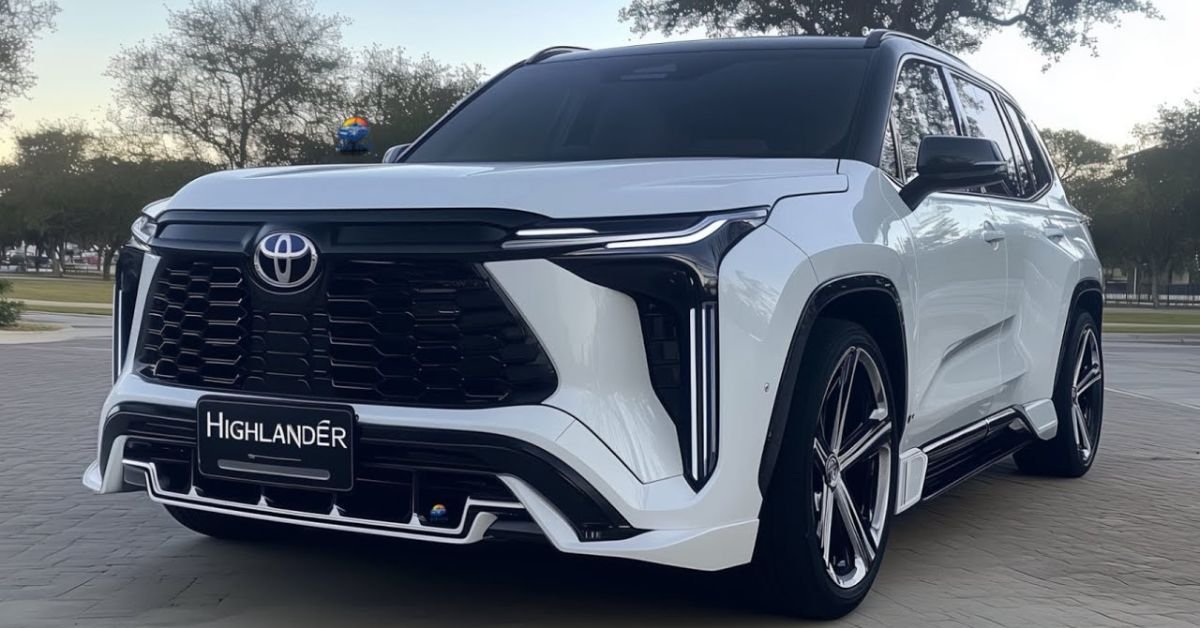

2026 Toyota Highlander the conversation is shifting toward hybrid efficiency, smarter cabin tech, and a more polished family-SUV experience. For families shopping in the three-row SUV space, that matters. Fuel costs are still a pain point, safety tech is no longer optional in buyers’ minds, and everyone from kids to grandparents expects charging ports, screens, and a quiet ride. The 2026 Highlander appears designed around that reality.
A Sharper Exterior
The 2026 Toyota Highlander is expected to arrive with a cleaner and more confident exterior design. Toyota is not trying to turn it into something extreme. Instead, the updates seem focused on making the SUV look more premium and planted on the road.
The refreshed front end reportedly includes redesigned LED headlights and a larger grille. Sharper body lines give the SUV a more athletic stance, while stylish alloy wheels help move it away from the plain family-hauler image that older midsize SUVs sometimes carried.
The wider stance is another important detail. It gives the Highlander more road presence, but it may also help the SUV feel more stable during highway driving and cornering. For families, that is the kind of improvement they may not talk about at the dealership but will notice during long road trips.
| Exterior Update | Buyer Benefit |
|---|---|
| Redesigned LED headlights | Better visibility and a more modern look |
| Larger front grille | Stronger road presence |
| Sharper body lines | Sportier and more premium styling |
| Stylish alloy wheels | More upscale appearance |
| Improved aerodynamics | Reduced wind noise and better efficiency potential |
Toyota has also reportedly worked on aerodynamics. That may sound boring, but it matters. Better airflow can reduce cabin noise and help improve highway fuel efficiency. Small gains, yes, but family SUVs live in the real world. Every little bit counts.
Hybrid Efficiency
The biggest story around the 2026 Highlander is its expected focus on improved hybrid technology. Toyota has been one of the strongest players in hybrid vehicles for years, so this is familiar territory for the brand.
The new Highlander is expected to offer a turbocharged petrol engine along with an enhanced hybrid powertrain. The hybrid setup combines a gasoline engine with electric motor assistance, helping deliver smoother acceleration and better fuel economy.
For families, the hybrid version makes a lot of sense. School runs, city traffic, grocery trips, office commutes, and weekend getaways all reward efficiency. A hybrid SUV can feel especially useful in stop-and-go driving, where electric assistance helps reduce fuel use.
| Powertrain Option | Expected Character |
|---|---|
| Turbocharged petrol engine | Strong everyday performance |
| Enhanced hybrid powertrain | Better fuel economy and quieter driving |
| Electric motor assistance | Smoother low-speed acceleration |
| Updated platform tuning | Improved comfort and stability |
The Highlander is also expected to benefit from Toyota’s TNGA platform improvements. This platform is designed to improve handling, ride comfort, and cabin refinement. In plain English, that means the SUV should feel more composed, quieter, and less tiring to drive.
That is exactly what families want. Nobody is buying a Highlander to win a drag race. They want confidence, comfort, and efficiency without fuss.
A More Comfortable Cabin
Inside, the 2026 Highlander reportedly gets a more refined and spacious cabin. This is one area where Toyota cannot afford to fall behind, because the midsize SUV segment is packed with strong rivals offering big screens, soft-touch materials, clever storage, and near-luxury features.
The new Highlander is expected to offer improved seat materials, better cushioning, increased legroom, and stronger sound insulation. These are not glamorous upgrades, but they make a huge difference during daily ownership.
Anyone who has done a five-hour highway trip with kids in the second row knows exactly why seat comfort and cabin quietness matter. Less road noise means easier conversations. Better seats mean fewer complaints. More legroom means adults can actually sit in the back without feeling punished.
The SUV is expected to continue offering flexible 7- or 8-passenger seating configurations, depending on the variant. That flexibility is one of the Highlander’s biggest strengths. Some buyers prefer second-row captain’s chairs for comfort, while others want a bench seat for maximum passenger capacity.
Digital Features
Technology is no longer just a luxury add-on. It is part of how families use vehicles every day. Navigation, music, phone calls, charging, rear-seat devices, and software updates all matter.
The 2026 Highlander is expected to include a larger touchscreen infotainment system, wireless Apple CarPlay and Android Auto, a digital instrument cluster, over-the-air software updates, USB-C ports, and wireless smartphone charging.
That is a strong list, especially for families juggling multiple devices. USB-C ports are now essential, not fancy. Wireless smartphone charging is one of those features people dismiss until they use it daily. And OTA updates could help keep the software fresher over time without dealership visits for every small update.
| Tech Feature | Why It Matters |
|---|---|
| Larger touchscreen | Easier navigation and media control |
| Wireless Apple CarPlay/Android Auto | Less cable clutter |
| Digital instrument cluster | Cleaner driving information |
| OTA updates | Potential software improvements over time |
| USB-C ports | Faster, modern charging support |
| Wireless charging | Convenient daily phone use |
The key question will be how much of this comes standard and how much is locked behind higher trims. That is where many SUVs start looking affordable on paper but expensive once buyers add the features they actually want.
Toyota Safety Sense 3.0
Safety has always been central to the Highlander’s appeal, and the 2026 model is expected to continue that focus with Toyota Safety Sense 3.0.
The safety package is expected to include adaptive cruise control, lane-keeping assist, blind-spot monitoring, pedestrian detection, and automatic emergency braking. Enhanced cameras and sensors should help the system detect vehicles, pedestrians, lane markings, and traffic situations more accurately.
For a family SUV, these features are not just brochure items. They help in real driving. Adaptive cruise control reduces fatigue on highways. Lane-keeping support helps during long commutes. Automatic emergency braking can add an extra layer of protection in sudden traffic situations.
No driver-assistance system replaces attention behind the wheel, obviously. But in a large family SUV, these technologies can make daily driving feel calmer and safer.
Driving Comfort Over Aggression
The 2026 Highlander is expected to remain focused on smooth, predictable driving rather than sporty aggression. That is the right approach for this SUV.
Expected driving characteristics include balanced steering, a smooth suspension setup, stable highway manners, and strong braking performance. The hybrid version should feel especially quiet at lower speeds, which is useful in city driving and residential areas.
The updated TNGA-based setup should also help reduce vibrations and improve body control. That means fewer harsh impacts over broken roads and better stability when the SUV is fully loaded with passengers and luggage.
This is where Toyota understands its audience well. Highlander buyers are not looking for drama. They want an SUV that feels easy, safe, and composed from Monday school runs to Sunday road trips.
Cargo Space and Everyday Practicality
The Highlander’s practical side remains one of its biggest selling points. The 2026 model is expected to continue offering a large rear cargo area, fold-flat second and third rows, and flexible passenger-luggage configurations.
That flexibility is what makes three-row SUVs so popular. One day, the Highlander may be carrying seven passengers. The next day, it may be hauling luggage, sports gear, groceries, furniture boxes, or a stroller the size of a small spacecraft.
Additional interior storage compartments should also help keep the cabin organized. Families always need places for bottles, snacks, cables, sunglasses, toys, receipts, and random mystery items that somehow appear in every car.
| Practical Feature | Use Case |
|---|---|
| Fold-flat rear seats | Expands cargo space quickly |
| 7- or 8-seat layout | Flexible family configuration |
| Large cargo area | Useful for trips and daily errands |
| Extra cabin storage | Helps organize smaller items |
| Quiet cabin | Better comfort on longer drives |
Expected Price and Launch Timeline
The 2026 Toyota Highlander is expected to arrive globally around late 2025, with wider availability during 2026. However, pricing and launch timing will vary depending on market, trim level, powertrain, and local taxes.
The estimated price range mentioned for some markets is around ₹38 lakh to ₹48 lakh, depending on the variant and hybrid equipment. That estimate should be treated carefully, especially for markets where the Highlander has not traditionally been a mainstream official offering.
If Toyota positions the new Highlander with advanced hybrid tech and premium cabin features, higher trims could become significantly more expensive. The real value will depend on what features are included in mid-level variants.
Final Verdict
The 2026 Toyota Highlander looks positioned to continue doing what it has always done best: serve families with comfort, space, safety, and reliability. The expected improvements in hybrid efficiency, cabin refinement, digital features, and safety technology make it even more relevant in a market where buyers want smarter SUVs, not just bigger ones.
It may not be the flashiest midsize SUV on the road, and that is perfectly fine. The Highlander’s strength has always been its calm confidence. For families wanting a practical, fuel-efficient, comfortable, and tech-ready three-row SUV, the 2026 Highlander remains one of the names worth watching closely.
FAQs
Is the 2026 Toyota Highlander officially launched?
The 2026 Toyota Highlander is expected to arrive around late 2025 or during 2026, depending on the market. Final launch timing may vary by region.
What engine options are expected in the 2026 Toyota Highlander?
The SUV is expected to offer a turbocharged petrol engine and an enhanced hybrid powertrain, though final specifications may differ by market.
Will the 2026 Toyota Highlander have Toyota Safety Sense 3.0?
The 2026 Highlander is expected to include Toyota Safety Sense 3.0 with features such as adaptive cruise control, lane-keeping assist, pedestrian detection, and automatic emergency braking.
How many passengers can the 2026 Toyota Highlander seat?
The Highlander is expected to offer 7- or 8-passenger seating configurations, depending on the variant and second-row seat layout.
What is the expected price of the 2026 Toyota Highlander?
Some estimates place the price around ₹38 lakh to ₹48 lakh, but this should be treated as unofficial until Toyota confirms market-specific pricing.