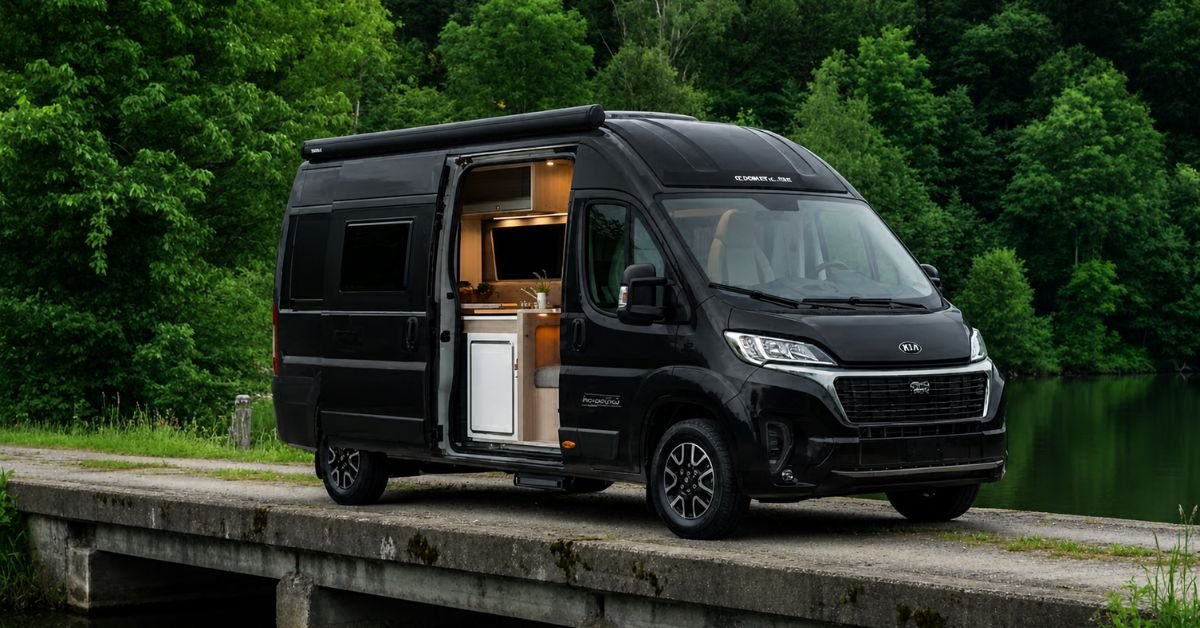

The American camper market is undergoing a major transformation. Buyers are no longer focused only on oversized motorhomes that cost over $100,000 and consume excessive fuel. Instead, modern travelers want efficiency, flexibility, affordability, and technology. The 2026 Kia Camper arrives at exactly the right moment.
Kia is redefining the camper segment with its 2026 Camper Van, developed on the highly anticipated PV5 architecture and designed specifically for modern American travelers.
A Smaller Camper for a Changing Market
The biggest shift in the camper space is simple: people want freedom without financial punishment. Not everyone wants to spend $100,000 or more on a Class B van, and not everyone has the driveway space or confidence to handle a full-size motorhome.
That is where the idea of a Kia-built camper starts to make sense. Kia already has a reputation in the U.S. for practical family vehicles, modern interiors, long warranty coverage, and strong value. A compact camper carrying that same formula would land in a market that is clearly hungry for something fresh.
The appeal is not just price. It is usability. A camper that can handle city driving during the week and road trips on the weekend has a very different kind of value compared with a traditional RV that sits parked most of the year.
Exterior Design
What makes the 2026 Kia Camper concept interesting is its reported design direction. Instead of looking like a giant white box on wheels, it leans into a sleeker, SUV-inspired shape. That matters more than people think.
A van that looks modern and manageable lowers the intimidation factor. Buyers who might never consider a classic motorhome could see something like this and think, “Yeah, I could actually drive that.”
Expected exterior features include dark-tinted privacy glass, a powered sliding side door, rear swing-out cargo doors, slightly raised ground clearance, and roof rails that could support optional solar panels. That combination gives it two personalities: easygoing city vehicle during normal use and adventure-ready camper when the road starts calling.
| Feature Area | Expected Benefit |
|---|---|
| Aerodynamic body | Better fuel efficiency and quieter highway driving |
| Sliding side door | Easier access at campsites and parking lots |
| Rear cargo doors | More practical loading for gear and luggage |
| Raised clearance | Better confidence on rough roads and campsites |
| Roof rails | Space for solar panels, storage, or outdoor gear |
It is not trying to be a luxury bus. That is the point. It looks more like a smart travel tool than a rolling hotel suite.
Hybrid Power
If the reported hybrid setup becomes reality, this would be one of the most important parts of the Kia Camper story. Traditional camper vans are not exactly famous for fuel savings. Many buyers accept poor mileage because they assume it comes with the lifestyle.
A turbocharged gasoline engine paired with electric motor assistance would change that conversation. Hybrid power gives smoother low-speed driving, quieter acceleration, and better efficiency in stop-and-go traffic. For long-distance travelers, it could also mean fewer painful fuel receipts.
The claimed fuel economy figure of around 25 miles per gallon combined would be a major selling point. That number, if confirmed, would put the Kia Camper well ahead of many gas-only camper vans and larger motorhomes.
| Vehicle Type | Typical Fuel Economy |
|---|---|
| Large motorhomes | Around 12–16 MPG |
| Traditional gas camper vans | Around 14–18 MPG |
| Claimed Kia Camper Hybrid | Around 25 MPG |
For road-trippers, that difference adds up fast. A family driving across several states could save hundreds of dollars over a long vacation. And with fuel prices always doing their little drama dance, efficiency is no longer just a nice bonus. It is part of the buying decision.
Interior Layout
The cabin is where a compact camper either wins people over or loses them completely. Based on the claimed layout, Kia appears to be aiming for a smart lounge-style interior instead of trying to cram in too much.
The front seats are expected to swivel, turning the driver and passenger area into usable living space when parked. That one feature makes a small cabin feel much bigger. Suddenly, the van is not just a vehicle with a bed in the back. It becomes a tiny living room, dining nook, remote-work setup, and rest stop all in one.
The rear seating reportedly converts into a queen-sized bed with supportive foam cushioning. That would make the camper best suited for couples, solo travelers, and maybe small families using clever packing and flexible sleeping arrangements.
Soft LED lighting would also help. It sounds minor, but anyone who has spent a night in a harshly lit vehicle knows how much lighting affects comfort. Warm ambient lighting can make a compact camper feel cozy instead of cramped.
Kitchen and Bathroom Options Add Real Travel Value
A small camper lives or dies by its daily-use details. A proper kitchenette can turn a weekend trip from expensive and chaotic into calm and affordable.
The expected kitchen setup includes an induction cooktop, compact refrigerator, filtered-water sink, and foldable preparation space. That is enough for coffee, breakfast, simple dinners, and roadside meals without constantly hunting for restaurants or gas station snacks.
The optional bathroom package is another big talking point. A cassette toilet, compact shower, and ventilation system would make longer trips more practical, especially for travelers who want to avoid crowded campground facilities.
| Interior Feature | Why It Matters |
|---|---|
| Induction cooktop | Safer, cleaner cooking without open flames |
| Compact refrigerator | Keeps food fresh during longer trips |
| Filtered-water sink | Useful for cooking, cleaning, and drinking |
| Cassette toilet | Adds comfort during remote travel |
| Compact shower | Helpful for beach, hiking, and off-grid trips |
No, it would not feel like a hotel bathroom. Nobody should expect that in a compact camper. But having basic facilities on board changes the whole travel experience.
Off-Grid Features for Weekend Freedom
The modern camper buyer does not just want a place to sleep. They want a small self-contained system that can support real adventures. That is why off-grid capability has become such a big selling point.
The 2026 Kia Camper is said to support an auxiliary battery system, optional rooftop solar panels, and a smart energy monitoring screen. Together, those features could power lights, fans, refrigeration, small electronics, and basic camper functions for short off-grid stays.
This is especially attractive for national parks, beach camping, mountain pullouts, music festivals, and remote work trips. The dream is not necessarily disappearing into the wilderness for three months. For many buyers, it is more realistic: two or three days away without needing a hotel, outlet, or perfectly planned campground.
Technology and Safety
Kia has been strong in tech-heavy interiors, so the rumored camper would likely lean into that strength. A large touchscreen, wireless Apple CarPlay, smartphone-based climate controls, and camper-system monitoring would all fit the brand’s current direction.
Safety features could be just as important. Long-distance driving gets tiring, and camper vans create blind spots that many new buyers are not used to. Systems like a 360-degree camera, blind-spot monitoring, adaptive cruise control, lane-centering assistance, automatic emergency braking, and driver attention alerts would make the vehicle feel less stressful.
That matters for first-time camper buyers. A vehicle can have a great bed and kitchen, but if it feels scary to drive, many shoppers will walk away.
Pricing
The most attention-grabbing claim is the starting price: under $50,000 in the United States. That would be aggressive. Very aggressive.
Many Class B camper vans start well above $80,000, and custom adventure builds can easily push past $100,000. A hybrid camper with modern tech, sleeping space, a kitchenette, and available off-grid equipment under $50,000 would make serious noise in the market.
Still, buyers should be careful here. Camper pricing can change quickly once options are added. Solar panels, bathroom packages, all-wheel drive, upgraded batteries, premium interiors, and safety packages could push the final price much higher.
| Price Category | Market Position |
|---|---|
| Under $50,000 | Strong value if confirmed |
| $50,000–$65,000 | Still competitive for a hybrid camper |
| $70,000+ | Competes with established camper van brands |
The base price may grab headlines, but the real question will be what equipment is actually included at that level.
Who Would the Kia Camper Suit Best?
This would not be the right camper for everyone. Large families, full-time RV owners, and travelers who need a true bathroom, tall standing room, and major storage may still prefer larger rigs.
But for couples, solo travelers, weekend explorers, remote workers, and small families, the formula sounds appealing. It offers enough comfort to make travel easier without becoming oversized or financially overwhelming.
It could also work for people who want one vehicle instead of two. A compact camper that can double as a daily driver has a very different ownership case than a giant RV that only moves a few times a year.
Final Verdict
The 2026 Kia Camper idea hits a very real nerve in the American travel market. Buyers want smaller, smarter, cleaner, and more affordable ways to explore without committing to a massive RV. A hybrid camper with flexible seating, a queen-style bed, kitchenette, off-grid power, modern safety features, and a price near $50,000 would be a serious disruptor.
But the key word is “would.” Until Kia confirms the model, buyers should view the current claims as exciting but unproven. Still, the popularity of this story says something important: the market is ready for a camper that feels less like a luxury toy and more like a practical ticket to freedom.
FAQs
Is the 2026 Kia Camper officially confirmed?
Not based on the information available here. The reported specifications and pricing should be treated as unverified until Kia makes an official announcement.
What is the expected fuel economy of the 2026 Kia Camper?
The commonly discussed figure is around 25 MPG combined, but that number has not been officially confirmed for a U.S.-market Kia camper.
How much could the Kia Camper cost?
The rumored starting price is under $50,000, though optional features like solar panels, all-wheel drive, bathroom equipment, and upgraded batteries could raise the final cost.
Would the Kia Camper be good for full-time van life?
It would likely suit weekend trips, short road adventures, remote work travel, and couples’ camping better than full-time living, especially if the layout remains compact.
Who are the main buyers for this type of camper?
Likely buyers would include couples, solo travelers, small families, digital nomads, retirees downsizing from larger RVs, and first-time camper shoppers.