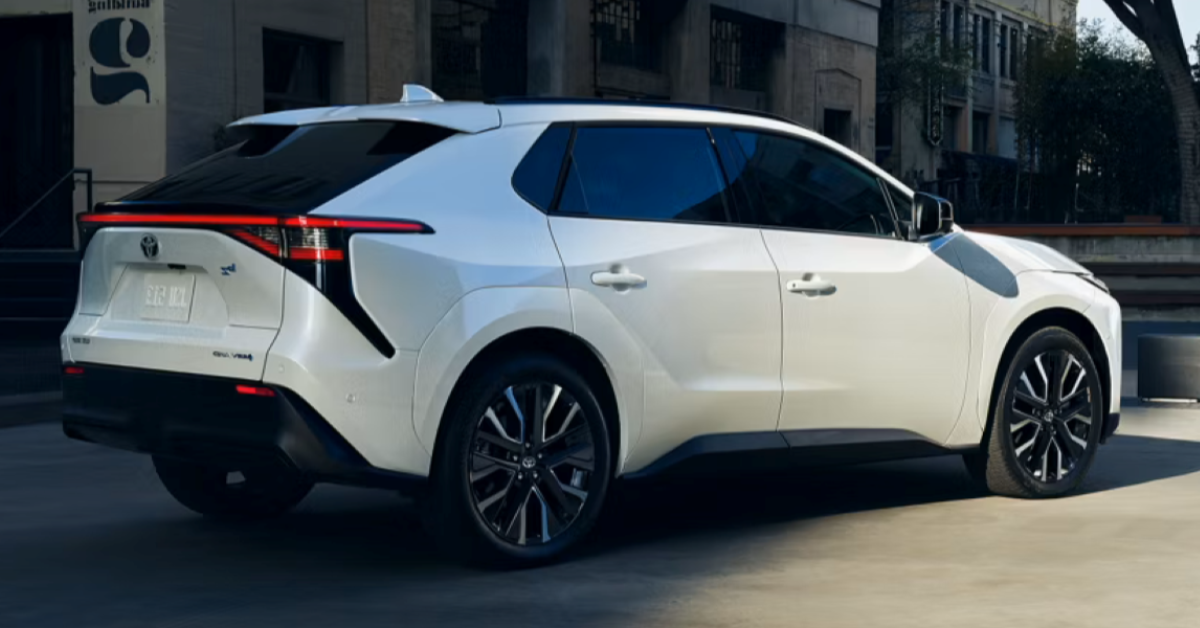

Toyota finally fixed most of what people complained about in the bZ4X, and honestly, that matters more than it may seem. For years, Toyota looked oddly hesitant in the EV race, almost like the company was standing at the edge of the pool with one foot in the water while rivals were already doing laps. The 2026 Toyota bZ changes that mood. It is quicker, more usable, better at charging, and finally competitive on range. Yet after spending time with what should have been Toyota’s clean redemption story, one frustrating truth remains: the hardware is much better, but the software still feels like yesterday.
Toyota’s EV Crossover Finally Grows Up
Toyota has done real work here, not cosmetic work pretending to be progress. The 2026 bZ, which drops the awkward “4X” naming, gets updated batteries, stronger motors, better range estimates, and more credible fast-charging performance. That is not a minor refresh. That is Toyota trying to make its mainstream EV actually belong in the same conversation as the Tesla Model Y, Hyundai Ioniq 5, Chevrolet Equinox EV, and Ford Mustang Mach-E.
Here’s the basic shape of the car on paper:
| Spec | 2026 Toyota bZ |
|---|---|
| Starting price | $36,350 |
| Range | 236 to 314 miles |
| Drivetrain | FWD or AWD |
| DC fast charging | Up to 150 kW |
| Power output | 221 to 338 hp |
| Battery | 57.7 kWh or 74.7 kWh |
That range spread matters. The outgoing bZ4X never really shook off the feeling that it was behind from day one. A max of 314 miles in the right trim is a much stronger answer, especially for buyers who just want a practical family EV and do not care about internet bragging rights. And yes, the price is more sensible now too.
What the bZ Gets Right on the Road
The nicest surprise is that the bZ still feels like a Toyota in the best possible way. Not flashy. Not weird. Not trying to reinvent the steering wheel and then hide it inside a menu. It drives like a normal crossover that happens to be electric, and for a huge chunk of buyers, that is not a compromise. That is the point.
The chassis tuning seems thoughtful. The car feels lighter on its feet than some rivals, even in a segment where most EV crossovers are hefty machines pretending they are nimble. The front-wheel-drive version has enough punch to feel lively, though torque steer is still part of the deal. The all-wheel-drive trim looks like the sweet spot if budget allows. More power, better balance, and less of that tugging sensation when you put your foot down.
Inside, Toyota also made the cabin easier to live with. The revised console layout, less cluttered dash, and more visible driver display all sound small on paper, but these are the exact kinds of changes that make a daily driver feel calmer. That counts. Anybody who has spent time with an overdesigned EV interior knows how quickly “futuristic” can become “annoying.”
And then there’s the underrated bit: physical controls. Real buttons. Real switches. Simple door handles. Stuff you can use without taking a postgraduate course in touchscreen logic. In a market where some automakers seem determined to turn every cabin into an iPad on wheels, Toyota’s restraint is oddly refreshing.
Range and Charging Are No Longer the Embarrassment
This is probably the biggest turnaround story. The old bZ4X took a beating for range and charging, and not unfairly. For an EV launched into a rapidly maturing market, it felt half-finished. The 2026 bZ sounds much more serious.
In colder weather, some range loss is expected across the entire EV market. That is not a Toyota problem; that is physics. The more relevant question is whether the drop feels catastrophic. Based on the review details you shared, it does not. Real-world winter performance in the mid-200-mile ballpark from a nominal 314-mile setup is not ideal, but it is believable and competitive enough.
The charging story is better too. Toyota has moved to a NACS port, which is important not just symbolically but practically, because access and convenience now matter almost as much as headline charging speed. A 150-kW ceiling is not class-leading anymore, and Hyundai-Kia still has an advantage here, but if the charging curve is smoother and repeated fast-charging sessions are no longer a problem, that is major progress.
For shoppers trying to compare EV ownership basics, it helps to cross-check public resources like the EPA’s consumer guide at FuelEconomy.gov, the U.S. Department of Energy’s charging information at afdc.energy.gov, and recall or safety records through NHTSA.gov. That broader homework matters because sticker specs rarely tell the full ownership story.
The Big Missing Feature: Proper EV Route Planning
And here’s where the whole thing wobbles.
Toyota improved the battery. Improved the motors. Improved the charging behavior. Improved the cabin usability. Yet it apparently did not give the bZ the one software feature modern EV buyers increasingly expect as standard: built-in EV route planning.
That is the problem. Not because every owner does long road trips every weekend. Most do not. But because this is now basic competence in the EV space. Buyers spending north of $35,000 should not have to juggle apps and workarounds just to map a longer drive with charging stops. They definitely should not be relying on a phone app to do what the car itself ought to handle.
The weird part is that Toyota seems to know how to do better. Its newer Arene software platform, reportedly available on other models, points to a cleaner, smarter future. But the bZ, for now, appears stuck on older software that lacks the polish and the practical intelligence competitors already offer.
That has consequences.
| Area | 2026 Toyota bZ | Why it matters |
|---|---|---|
| Battery/range | Much improved | Makes it a real contender |
| Charging hardware | Better, now NACS | Easier public charging access |
| Cabin usability | Strong | Friendly for mainstream buyers |
| Interior space | Mid-pack at best | Rivals offer more utility |
| Route planning | Missing | Weakens road-trip confidence |
| Software polish | Behind rivals | Makes the car feel less complete |
This is the part that stings, because the bZ no longer feels like a fundamentally flawed EV. It feels like a decent EV held back by one stubborn omission.
How It Stacks Up Against Rivals
The competition is brutal here. Tesla still has the advantage of a mature charging and trip-planning ecosystem, even if the brand carries baggage for some buyers. Chevrolet’s Equinox EV and Blazer EV bring stronger software integration. Hyundai and Kia still feel like the charging-speed nerds of the class, and that is meant as a compliment. Ford’s Mustang Mach-E may be aging a bit, but it still offers a more cohesive all-around experience for drivers who care about engagement.
Toyota’s counterpunch is different. It is selling normalcy, familiarity, and the comfort factor of a badge millions of people already trust. That absolutely has value. A lot of value, actually. Some buyers would rather have a slightly less advanced EV from Toyota than a more advanced EV from a brand they do not trust yet. That is not irrational. It is how the real market works.
But trust only gets you so far when rival cars do more for the same money.
Price, Value, and the Real Verdict
At $36,350 to start, the 2026 bZ is at least in the fight now. That matters because Toyota could not afford to be expensive and compromised at the same time. The improved value equation gives the car a chance.
Still, the verdict is a little maddening. This is no longer an easy car to dismiss. It has become respectable. In some ways, pretty likable. It looks sharp, drives well, offers decent range, and feels easy to live with. For a buyer who wants an EV that behaves more like a conventional Toyota crossover, the bZ finally makes a coherent case.
But that missing route-planning feature hangs over the entire experience. In 2026, that is not a nerdy extra. It is basic EV competence. Until Toyota brings its better software stack to this vehicle, the bZ remains close to being a breakout hit without quite getting there.
That is the frustrating part. The ingredients are all on the table. Toyota just has to finish the recipe.
FAQs
What is the biggest improvement in the 2026 Toyota bZ?
The biggest gains appear to be in range, charging behavior, and overall competitiveness. It sounds much more usable than the old bZ4X.
What is the main feature missing from the 2026 Toyota bZ?
The big omission is proper built-in EV route planning, which many rivals now offer as a core function.
Is the 2026 Toyota bZ good for road trips?
It looks more capable than before thanks to better charging and range, but the lack of integrated route planning makes long trips less convenient.
How does the bZ compare with the Tesla Model Y and Hyundai Ioniq 5?
The Toyota feels simpler and more familiar to use, but Tesla and Hyundai still have stronger software and, in Hyundai’s case, faster charging.
Is the Toyota bZ worth buying?
It can be, especially for buyers who value Toyota’s reputation and want a straightforward EV. But software limitations are still a real drawback.